EYES ON POLITICS – PORT LEASE SPECIAL

Get in Touch
Register or login to send direct messages
EYES ON POLITICS - Eyes On Politics
Join the community on Amplify Voices Program — Eyes on Politics
Delivered to you by Daniel Mason BSc (Hons), CEng, MBCS, the author of The Art of Refletection: Insights on Power, Perception and Purpose, available on Amazon in Kindle and hardback editions.
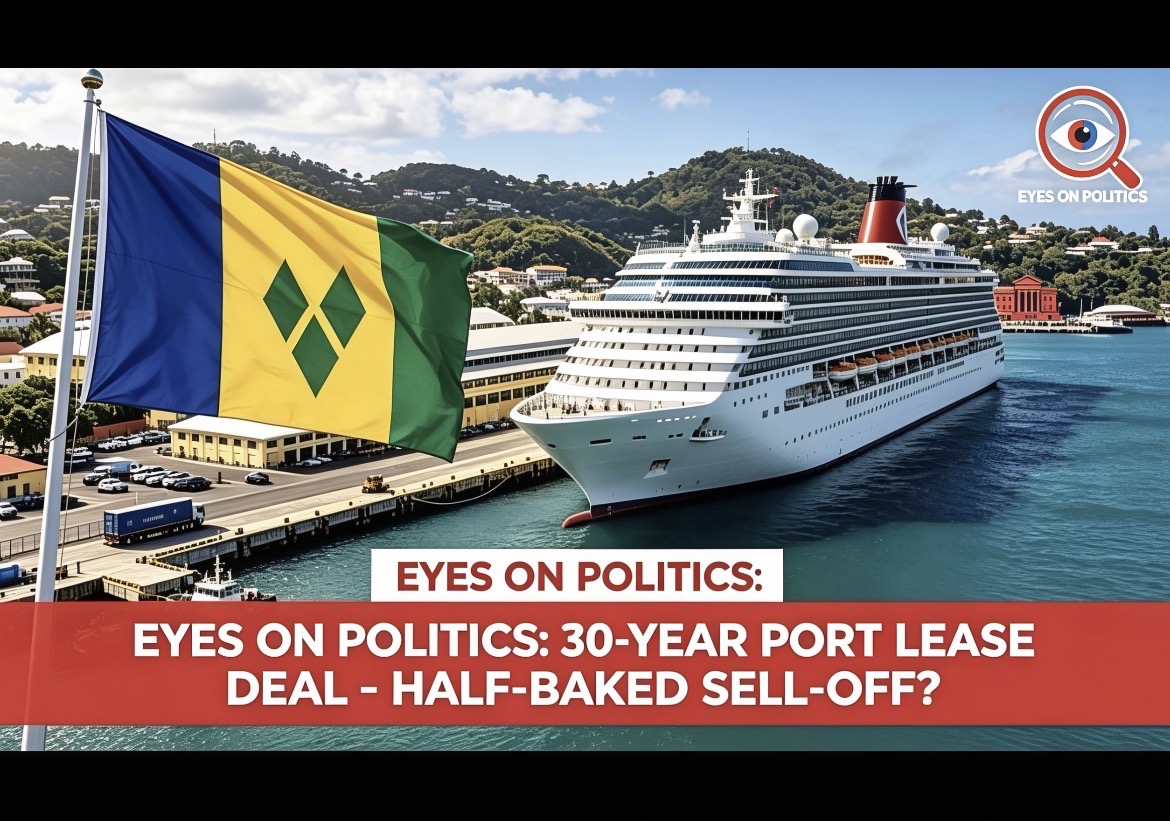
Deep Dive | Saint Vincent and the Grenadines – The 30‑Year Cruise Berth Lease
📌 What Exactly Has Been Agreed?
Signed on June 10, 2026 and announced publicly June 11, the agreement brings together the Government of Saint Vincent and the Grenadines and Global Ports Holding (GPH) — the world’s largest independent cruise port operator.
• Term: 30‑year concession/lease
• Asset: Kingstown Cruise & Ferry Berth
• Ownership: Remains with SVG Government; GPH holds exclusive operating rights
• Planned Investment: EC$225M – EC$250M (~US$83M – US$92M)
• Phases: Terminal upgrades, deeper berths, capacity for mega‑ships
• Local participation: Up to 30% stake via a Special Purpose Vehicle
On paper, it sounds transformative: private capital to fix an underperforming port, no immediate cost to taxpayers, and a promise to triple passenger arrivals from roughly 200,000 to over 600,000 within seven years. But as we dig deeper, the fine print — and what is missing from it — tells a far more complicated story.
⚠️ The Red Flags: Why Critics Call It Half‑Baked
1. A Term Too Long: 30 Years = Control for a Generation
Standard cruise port concessions across the Caribbean run between 15 and 25 years. At 30 years, this deal goes well beyond regional norms. Infrastructure investments of this scale are typically fully paid off and profitable within 8 to 12 years — meaning GPH could recoup every dollar spent and then enjoy nearly two decades of pure profit, with no obligation to share extra gains.
Effectively, this is control over a strategic national asset for its entire useful lifespan. There are no published clauses for mid‑term reviews, rent adjustments, or early termination rights — leaving SVG locked in long after the investment is recovered.
2. Financial Opacity: No Clear Numbers, No Guarantees
This is the most alarming gap: none of the critical financial terms have been made public. We do not know:
- The fixed annual rent payable to the government
- The percentage split of passenger fees and commercial revenue
- Whether there is a minimum guaranteed income floor
- How the 30% local ownership stake will be priced or accessed
GPH itself went private in 2024, meaning it no longer publishes full financial results. Without independent figures, the government is asking the public to trust in projections alone — a risky move when similar deals in neighboring islands have seen public revenue fall after leases were signed.
A deal without transparent revenue terms is not a partnership — it is a blank cheque.
3. Loss of Sovereign Control & Monopoly Risk
By granting exclusive rights, the government eliminates competition for 30 years. GPH will set berthing fees, schedule arrivals, and manage commercial activity. In practice, this turns the state into a passive landlord, unable to redirect the port for trade, disaster response, or national development priorities without paying heavy penalties.
As a global operator, GPH bundles routes and pricing across its network. There is a real danger that Kingstown will be slotted into cruise schedules only when convenient for the company, rather than what brings the most benefit to SVG.
Control shifts from the people’s representatives to a private boardroom thousands of miles away.
4. The “Volume vs. Value” Trap
The promise is “triple the arrivals,” but more passengers do not automatically mean more money stays in the country. The global cruise industry retains 70–85% of its revenue on board — from food, drinks, shopping, and excursions. Current data shows visitors spend only about EC$59 per person in Kingstown, one of the lowest figures in the Eastern Caribbean.
Without strict rules requiring local hiring, local procurement, and shore‑excursion partnerships, the port could become little more than a drop‑off point — with crowds, congestion, and environmental costs borne by the local community, while profits flow out.
Quantity does not equal quality unless enforceable safeguards are written into the contract.
5. Environmental & Governance Deficits
More and larger vessels mean higher emissions, increased risk of sewage and ballast‑water pollution, coastal erosion, and pressure on local roads, water supplies, and waste systems. The agreement mentions sustainability in broad terms but contains no binding environmental targets, pollution limits, or dedicated funds for coastal protection.
Even more concerning is the process itself: the deal was negotiated behind closed doors, with no public consultation, no independent financial audit, and no parliamentary debate before the Memorandum of Understanding was signed. There was no competitive bidding process — only exclusive talks with one operator.
When a deal is made without transparency, accountability is impossible.
📝 Final Verdict: A Half‑Baked Agreement
Let’s be clear: upgrading the Kingstown cruise berth is necessary. The port has struggled financially for years, and private investment can bring expertise and connectivity that the state cannot easily afford.
But this deal, as presented, is unbalanced and incomplete. It offers long‑term control to a foreign operator in exchange for vague promises of growth. The risks — of lost revenue, reduced sovereignty, and environmental harm — are clear, while the benefits remain unproven until the full contract is published.
For now, this is a half‑baked agreement. It can still be fixed — but only if the government insists on shorter terms, transparent revenue sharing, minimum guarantees, strict local content rules, environmental protections, and independent oversight before the final binding agreement is signed.
At Eyes on Politics, we will continue to watch every step. This is not just a deal about ships and docks — it is about who controls the economic future of Saint Vincent and the Grenadines.
Join the Community